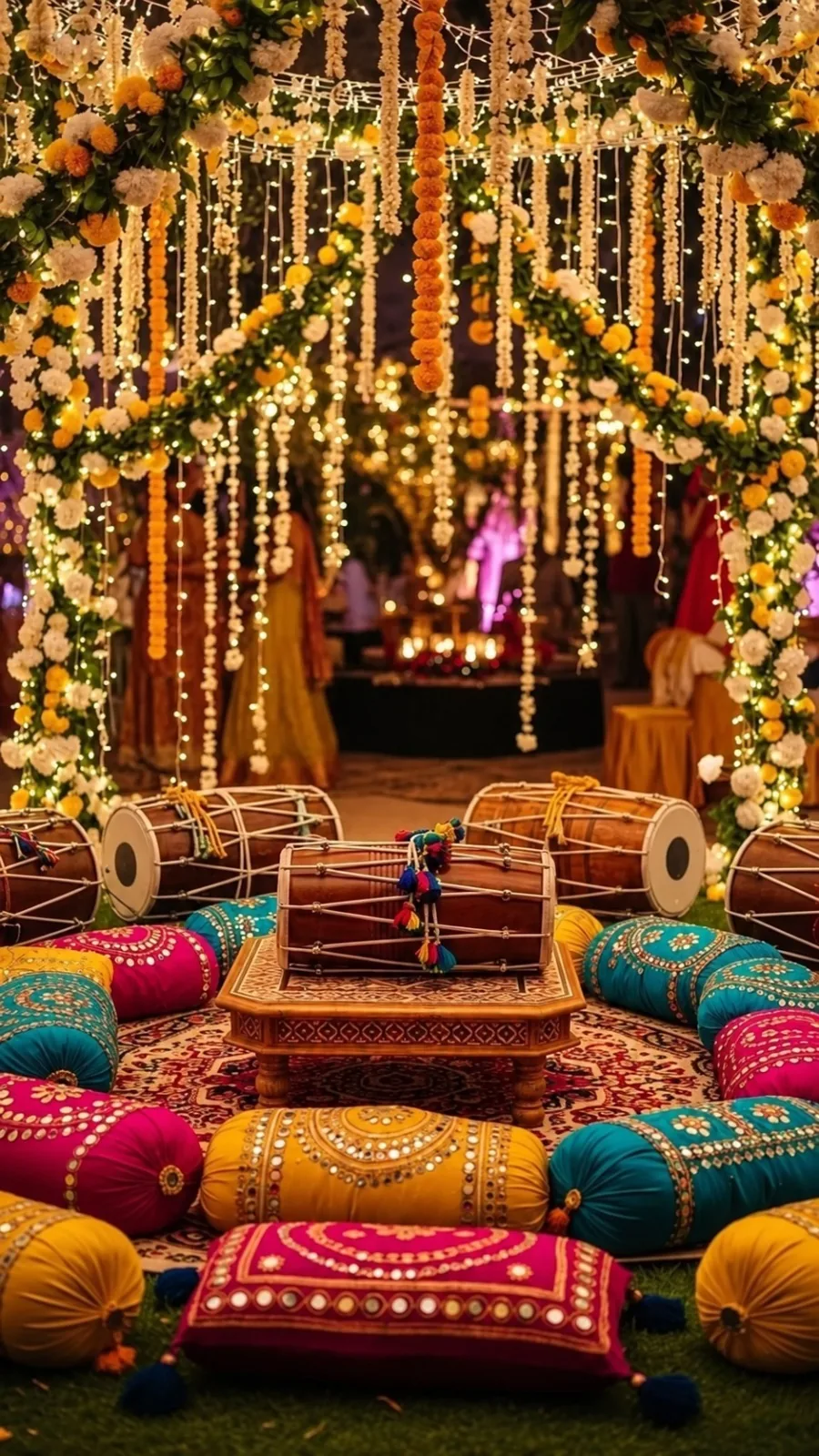
Is a dholki always at home, or can it be at a venue?
Many dholkis are hosted at home or in a lawn since they're an informal, family-led gathering, but some families now book a small venue space if home isn't practical for the guest count. Either works — it's the music and format that define a dholki, not the venue type.
How many dholkis does a typical wedding have?
This varies widely by family — some hold a single dholki, others host several across different weeks as different family branches take turns. There's no fixed number; it comes down to family tradition and how many people want to host one.
Can a dholki double as the only pre-wedding celebration, without a separate mehndi?
Yes — some smaller weddings skip a separate mehndi and treat the dholki as the main pre-wedding gathering instead. It comes down to family preference and budget rather than a fixed sequence of events.
Do I need professional performers for a dholki?
Not necessarily; many dholkis are led by family, with optional support for sound or music.
How can I manage sound at a home dholki?
Test equipment early, keep speakers directed inward and agree a finish time that respects the surroundings.
What should go in the vendor brief?
Include venue access, performance timing, electricity availability, setup space and the lead contact.