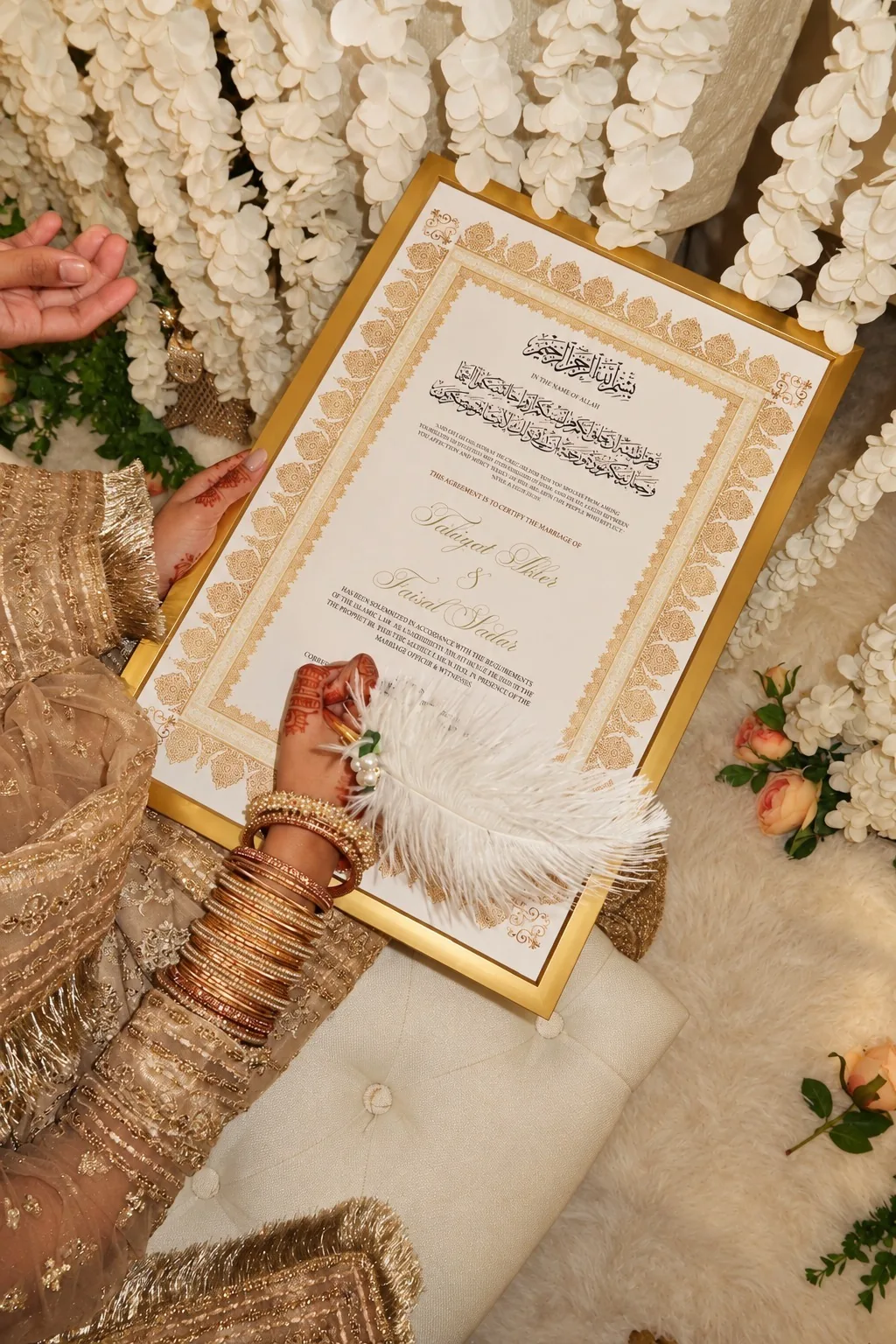
Can a nikkah and walima happen on the same day?
Yes — many Pakistani families combine the nikkah with the walima reception on the same day, especially for smaller weddings. If you do, plan the nikkah as a shorter opening segment with its own seating and timing before the main reception begins, and confirm with your venue whether that needs two separate room setups or one.
Who needs to be present at the nikkah ceremony?
At minimum, the bride, groom (or their representatives), witnesses from both sides, and someone qualified to conduct the ceremony, typically an imam or maulvi. Registering the marriage — getting the nikkahnama formally recorded — is a separate legal step usually handled by a registrar at the same sitting; exact requirements vary by mosque, registrar and province, so confirm with whoever is conducting your ceremony.
Do we need more than one copy of the nikkahnama?
It's worth asking your registrar for more than one certified copy at the time — needing it later for passport, bank or visa paperwork is common, and requesting a copy afterward is slower than getting extras on the day.
Who should arrange the nikkah officiant?
Agree this within the families early and confirm the person’s availability and requirements directly.
Can a nikkah be planned separately from the reception?
Yes. Keeping separate timelines can simplify a ceremony held at home, a mosque or a small venue.
What should guests be told in advance?
Share the address, arrival time, ceremony start time and any relevant venue or dress guidance.